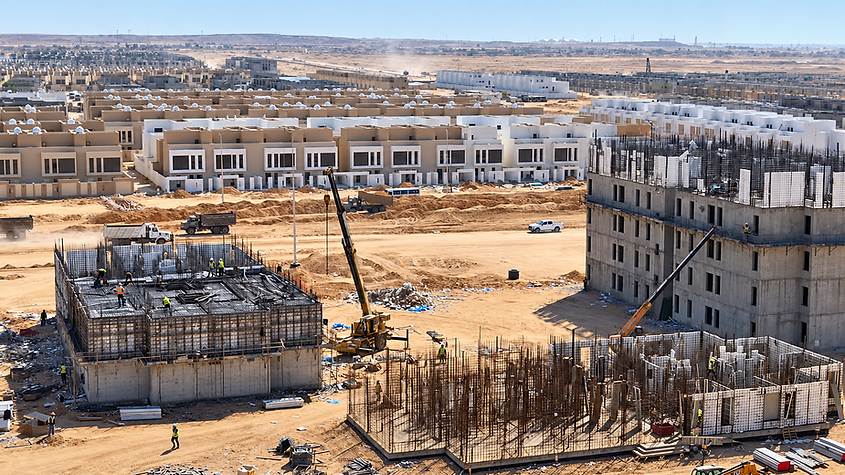
ALUMINIUM SYSTEM FROMWORK

Aluminum Formwork and Load-Bearing Concrete Walls
About the technology :
This technology turns the building site into a repeatable production line: precisely made formwork is assembled, cast, stripped and reused in the next cycle. Its efficiency depends on early design, repeated units and quality control, and recent engineering studies support it, as summarised on this page.

About the technology :
The system uses formwork made of aluminum alloy, assembled on site into wall and slab forms, with concrete cast inside them in a single monolithic pour. The concrete walls act as the load-bearing elements instead of a frame of columns and beams, following the approved structural design of each project.
In conventional building, the frame, the partitions, the services and the plastering follow one another. Here, formwork, reinforcement and services are prepared in advance, and walls and slabs are cast in a repeating cycle.
The formwork is a shaping tool, not a substitute for concrete or reinforcing steel. Structural safety is set by the approved calculations and drawings.

How does it work?
The cycle runs in seven consecutive stages and repeats from floor to floor and from unit to unit:
-
Design and early coordination: approve the architectural and structural drawings, coordinate electrical, plumbing and HVAC, and fix openings before formwork is made.
-
Formwork manufacture and site preparation: produce and number the panels to the drawings, and prepare foundations and work areas.
-
Reinforcement and embedded items: install rebar, openings, electrical boxes and sleeves.
-
Formwork assembly: set dimensions, alignment and plumb, and confirm sealing and bracing.
-
Inspection, casting and curing: approve formwork, steel and services before the pour, then cast, compact and cure the concrete.
-
Stripping: remove the formwork only after concrete strength and safety requirements are verified, as covered by the removal of forms and supports provisions of ACI 347R-14.
-
Reuse and finishing: clean, inspect and move the formwork to the next cycle, while services and finishes proceed in parallel.
Benefits of the technology :
-
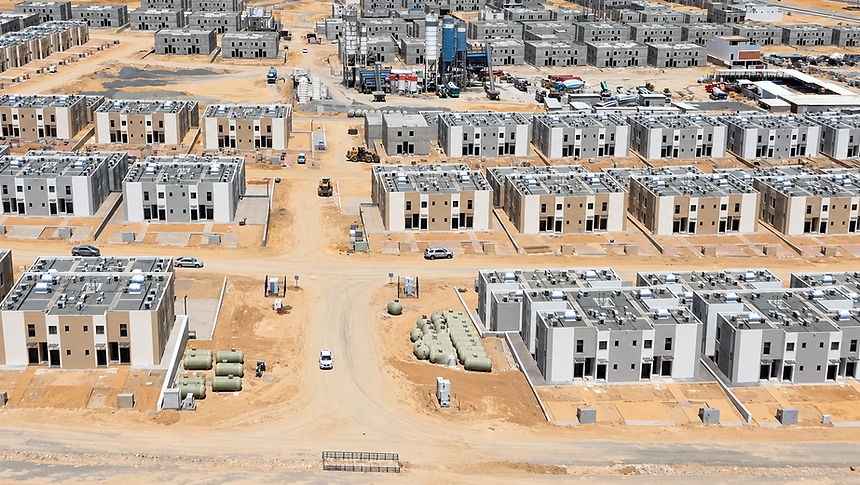
Faster execution: a repeating formwork cycle and advance preparation shorten the structure phase, the system is at least twice as fast as conventional timber formwork methods.
-
Formwork reused hundreds of times: Aluminum formwork reuse of 200 to 250 repetitions.
-
Economic value on repeated projects: The concrete frame at 31% to 53% cheaper than timber depending on reuse counts .
-
Smooth concrete surface, less finishing: it is expected to remove the 1 to 2 cm plaster coat usually needed on timber-formed walls.
-
Repeatable dimensional accuracy: prefabricated formwork gives matching dimensions across units and more even surfaces.
-
Less site work: fewer separate tasks, such as block partitions and plastering, and more repeatable execution.
-
Standard procedures and quality control: fixed work steps and inspection points reduce reliance on individual judgment between crews.
-
Earlier handover: a shorter structure phase lets services and finishes start sooner.
-
Good structural performance of load-bearing concrete walls: damage to such buildings stayed limited compared with frame buildings in the February 2023 Türkiye earthquakes (Lochhead and Brzev, 2026).